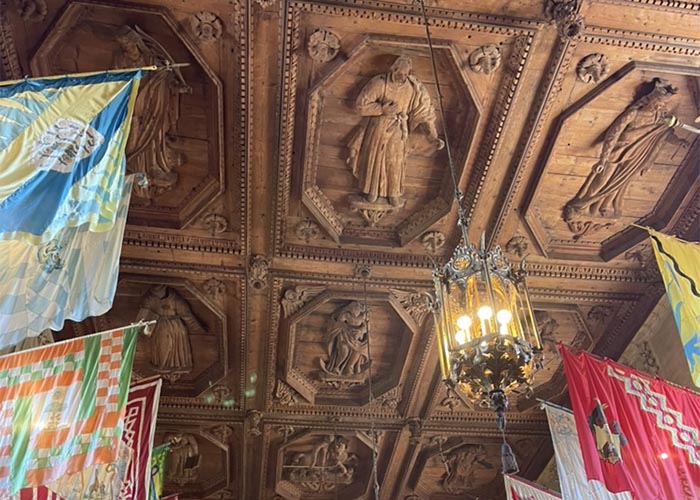
Seattle to San Luis Obispo via the Coast Starlight , 29 hours 29 minutes
The time has come to test out my new travel gear, especially my Amtrak Cooler 2.0. I’m taking this adventure with John, a childhood friend. This feels very appropriate because back in the late 1960s when John and I were kids, we were testing out “travel” gear for a different kind of trip: Tent Flights. Thanks to John F. Kennedy, NASA’s mission was to land a man on the moon before the end of the decade. In preparation, they were conducting in-space tests of the Saturn 5 rocket and new Apollo space module. John, Joe and I were captivated by this and wanted to be a part of it. Whenever the astronauts would enter their module for a flight, we would all climb into a canvas tent in my front yard, vowing not to come out until the astronauts were safely home. The travel gear we were testing during those several days were how to store and cook our meals, how to store said meals after they left our digestive tracts, and how to keep ourselves from dying of boredom.
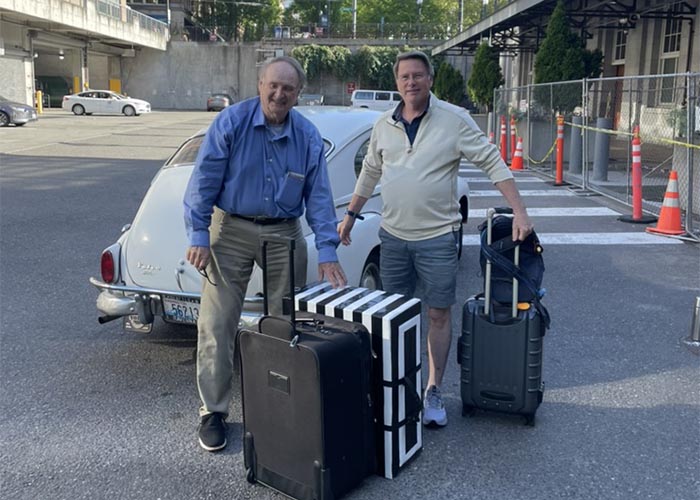
John and I are taking the Coast Starlight train to San Luis Obispo to see the Hearst Castle. The trip will take 4 days and 3 nights. I have enough food packed in the cooler and suitcase to feed the two of us for the entire trip. We will see if we are still enjoying it by the end. We arrive at King Street Station in a classic 1961 Volvo 544, compliments of Ingvar, who is a member of the local Volvo club. John and I both had 544s in high school, so I arranged for this ride as a surprise for his 70th birthday. It’s amazing just how powerful the sense of smell is. The smell of the car’s vinyl seats, fabric headliner and various gas engine odors brings back a flood of memories.
We enter the station and sit on a bench next to an older couple with a small dog. All three of them are very friendly. The woman says “My name is Gay, this is our dog, Othello, and this is Freddie. He is in rock and roll bands.” I learn that Freddie Dennis played bass with The Liverpool Five in the 1960s, The Kingsmen (of Louie Louie fame) in the 1970s and 80s, his own band Freddie and the Screamers in the 1980s and 90s, and most recently ,The Sonics.
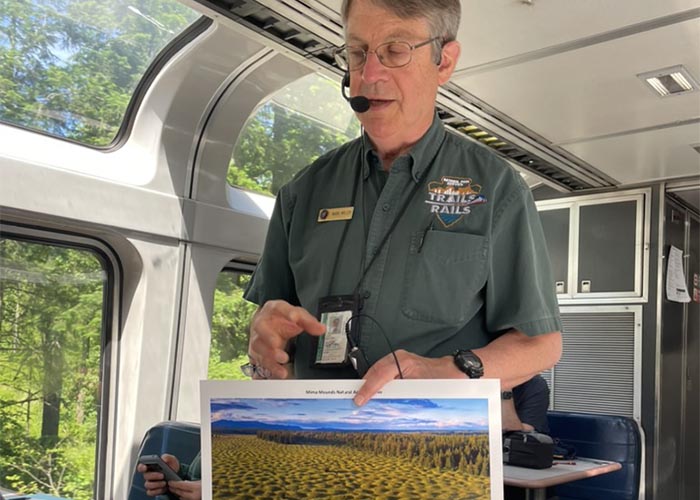
John and I board the train, leave some belongings at our seats and head straight to the observation car to commandeer a table. Two men who are Trails and Rails volunteers from the Klondike Gold Rush National Historical Park in Seattle are giving a talk about the geology and history of the area. From the moment we leave Seattle until the time we pull into Portland’s Union Station, they tell us about points of interest as we roll past. I’m a history buff, but I learn plenty from them. They give the talk daily from April through September. There is a companion talk on the Empire Builder train on the stretch that runs from Seattle to Wenatchee. This just might be the impetus for another trip.
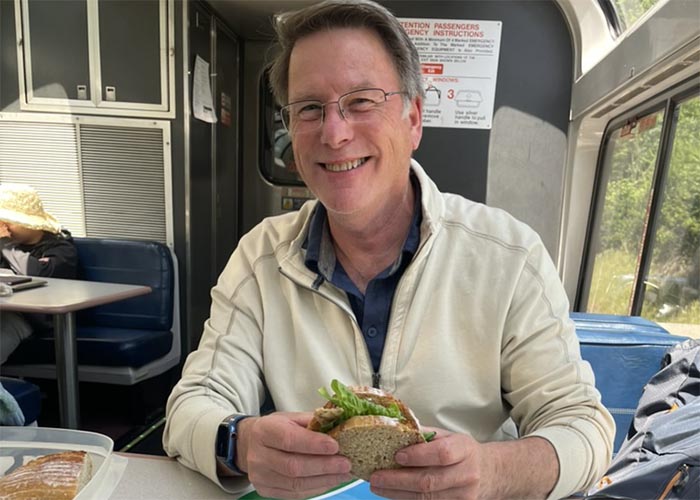
It’s lunchtime, which means I get to have my first meal from the Amtrak Cooler! Lunch is a chicken sandwich, with thin slices of chicken breast (sauteed in olive oil, garlic and white wine), mayo, mustard and romaine lettuce, all between two slices of home-made whole wheat bread. What a great sandwich! I don’t have enough bread to last us for the whole trip, so it’s time to start a new loaf. I have a container with all the dry ingredients except yeast pre-mixed. I add the yeast and water and give the container a good stir and vigorous shake once the lid is closed. The plan is for the dough to rise over the next 24 hours so I can bake it once we get to the San Luis Obispo hostel.
As was the case with our Tent Flights, boredom can be an issue on these long train rides. I’ve come prepared with several detective books on my Kindle and also my sock darning and clothes mending kit. I pull out an old, very loved T shirt with a new hole forming. I stitch it up with a contrasting color of thread that says “There used to be a hole here!” I love visible mending.
Boredom is a thing, but sleep is the real issue. Although there are sleeping berths, they are roughly four times the price of traveling by coach. If you are fortunate enough to have an empty seat next to you, by lifting up the leg rests it is possible to create a 36” x 17” platform, making it possible to lay down in a fetal position. The juncture between the leg rest and seat is very hard and uneven, though, so I brought three cushions made from an old memory foam topper. I think it would have worked, given the chance, but I discover on this trip that Amtrak is very popular during the summer months, with virtually no spare seats available. John and I both have to sleep sitting up. Note to self: Plan future adventures during the off seasons! The cushions were still helpful for our fannies, but we both felt robbed of a good night sleep.
We pull out of Sacramento Valley Station just after sunrise. I head to the cooler to collect today’s rations. Breakfast will be apple slices, cherries, dates, and sharp cheddar cheese, along with buttered bread and nuts. Lunch will be a De-Ja-Vu chicken sandwich. Dinner will be another repeat: Trofie Pesto and a tossed green salad along with wine purchased from the downstairs cafe. We enjoy our breakfast in the observation car along with coffee from the cafe. Palm trees rolling past confirm that we are making progress.
We pull into San Luis Obispo at 3:25pm, right on time! I prepare my luggage for the two-block walk to the hostel by attaching the cooler to the top of my rolling luggage. Velcro has been sewn into the luggage and taped to the cooler and this provides plenty of sticking power, keeping the cooler on top of the rolling luggage even without the extra strapping I thought I would need. I could easily walk two miles with this setup! The hostel is closed until 4pm but there is a table and chairs out front. I use this opportunity to proof the bread I’m making, putting it into a buttered aluminum bread pan I made for the trip.

After the hostel opens I take a mile walk to get our rental car. The walk is through a historic residential neighborhood with quaint 100-year-old homes. The rental car is privately owned and parked in front of one of the houses. I drive back to the hostel, thinking about dinner. John and I decide to live it up a bit and not eat out of the cooler tonight. We walk to a local Italian restaurant for dinner, followed by a visit to an ice cream shop. Virtually every establishment has “SLO” in its name. It takes me a while to realize that it’s an abbreviation of San Luis Obispo. It seems peculiar that this abbreviation is included in the names of almost all of the businesses in the district. Back at the hostel I go to the kitchen and preheat the oven to bake my bread. Hostels rock! It is so nice to have a cheap room in a cozy environment and be able to cook my own food and refreeze my Amtrak Cooler ice gel blocks. Although this hostel does have the traditional shared bunk bed sleeping rooms, John and I have our own private room with one bunk bed. The room is tiny and does not have a private bath, but these are minor inconveniences given the $80 per night room charge for the two of us.
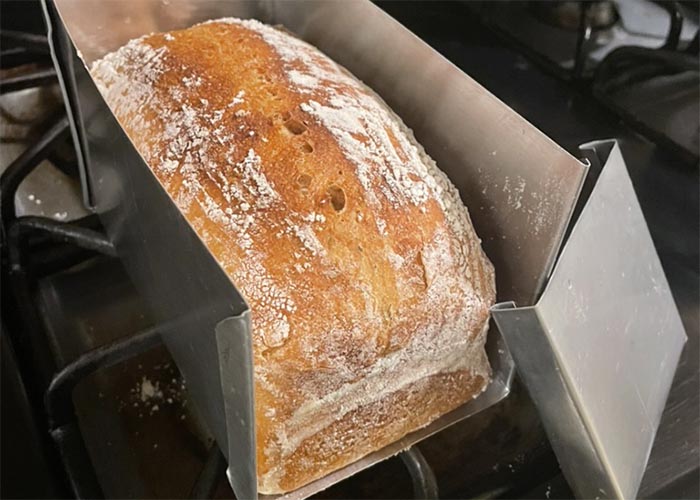
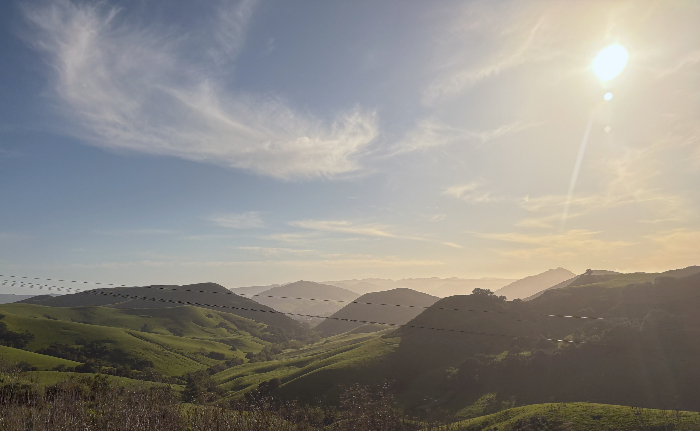
We both sleep like rocks, which helps to make up for the night before. The hostel offers home-made sourdough pancakes for breakfast, but we need to leave before they are ready, so we settle for their coffee and our home-made toast, apples, cherries, dates and cheese. John and I pack up the car, say our goodbyes and head West to the coast towards Hearst Castle. The scenery around Morro Bay is beautiful and the geology is interesting, with rolling hills and the occasional pillowy rock promontories. John tells me that these are morros, which are ancient mini volcanos where the ash and softer stone have been worn away over time, exposing the solid lava plug.
At the Hearst Castle visitor center we board a bus and take a 15-minute ride up the hillside. We learn from a recorded narration by Alex Trebek that for thousands of years the land was home to the Salinan and Chumash tribes. Spanish missionaries arrived in the late 1700s and attempted to convert them to Christianity . Twenty years later it became part of Mexico due to their War of Independence. By 1848 the land was part of the United States as the result of the Mexican American War. George Randolf Hearst was a geologist who made his fortune locating and mining for gold and other metals throughout the country. He began purchasing land in the area in 1865, quickly amassing over 80,000 acres. Although he did develop a cattle ranch, the land was not so much for exploitation as it was for recreation. He, his wife and their only child had many pleasant memories camping here, situating the tent at the top of the hill to enjoy the stupendous view of the land and coastline.
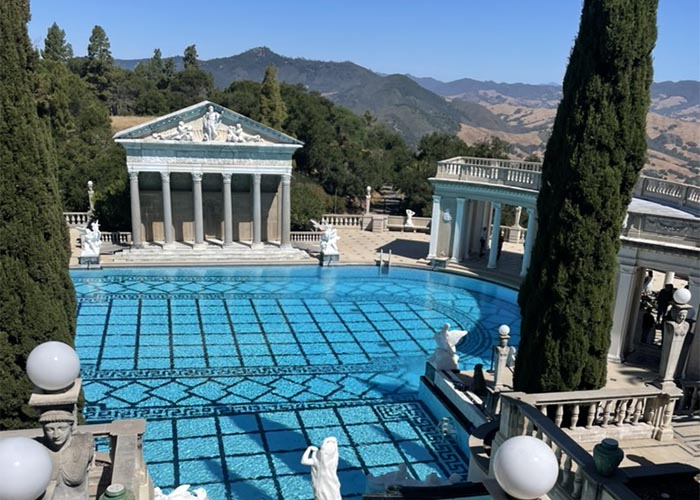
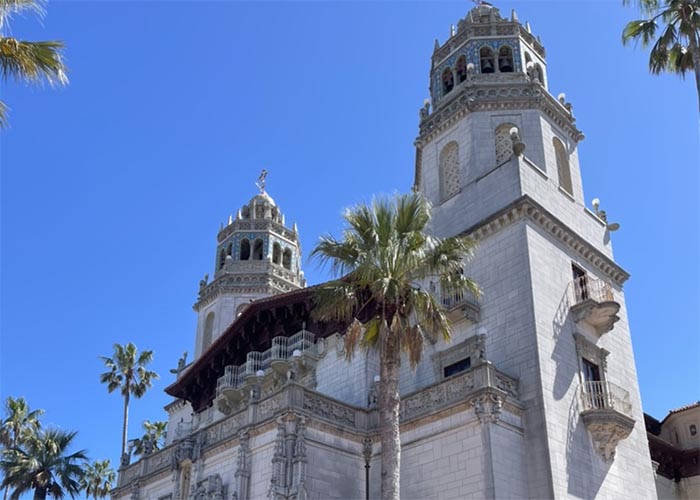
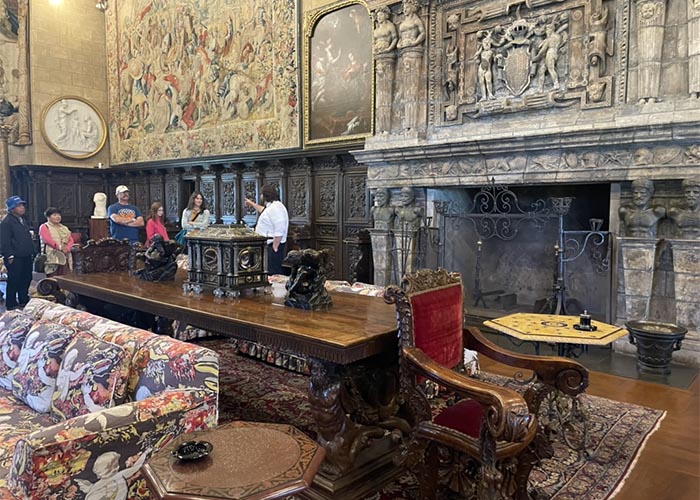
By the time Willam Randolf Hearst inherited it in 1919 from his parents, the parcel had expanded to 250,000 acres. To put things in perspective, if you were standing in the middle of a parcel this size you would need to walk 10 miles just to say “hi” to your neighbor! Within days of his inheritance he hired a Los Angeles architect, Julia Morgan (the first female licensed architect in the state) to help him build “a little something” on the site where he used to camp with his parents. The original plan and expectation was that the project would be completed in a couple of years. Hearst, however, had a penchant for constantly changing his mind and was able to fuel it with an unlimited budget due to his own fortune from his newspaper empire. His and Julia Morgan’s collaboration and construction continued until ill health forced him to stop in 1947. Shortly before his death he remarked that he figured the project was about 50% finished. What had been completed was three houses for his guests, with a combined size of approximately 12,000 square feet, and “a little something” that he built for himself with over 68,000 square feet. We did not have time to tour the guest houses on this visit, but the exteriors are beautiful examples of Mediterranean Revival architecture . Personally, though, I found the exterior of his “Casa Grande” to be a bit disappointing. It is basically a concrete structure fabricated to look old, but it doesn’t quite do the trick for me. (Julia Morgan was a pioneer in the use of reinforced concrete.) The interior, however, is another story. William was a collector of antiquities. It is said that while visiting Paris as a boy, he had a temper tantrum because his mother would not buy the Louvre for him! He made up for it as an adult, purchasing Renaissance art, 500-year-old European building interiors, 2,000-year-old Roman ruins and 3,500-year-old Egyptian statues, including one of Sekhmet, the goddess of disease and pestilence. With the help of his trusted friend and architect he worked all these treasures into his home and the result is quite stunning.
San Luis Obispo to Seattle via the Coast Starlight , 29 hours 29 minutes
We head back to the SLO station and board the train. It is jam-packed. Looks like we will have another night of less-than-optimal sleep. The ride home seems longer than the trip down, and the sleep is, again, less than optimal. I feel slightly guilty subjecting John to this ordeal. Even so, two hours outside of Seattle I’m thinking about what tweaks I want to make to my travel gear and I start planning my next trip. Recently, I heard that there are 3 types of fun. Type One Fun is pleasurable in the moment, like watching a really good movie. Type Two Fun isn’t always that much fun in the moment, but the memories are enjoyable for a long time afterward: like traveling Amtrak! Type Three Fun usually involves the exhilaration of surviving a harrowing experience. Nah, I’ll take a pass on that one.

One response to “Seattle WA – San Luis Obispo CA – Seattle WA”
Great read & I learned more about this trip than from your travel partner!