Chicago to Denver via the #5 California Zephyr, 18 hours 56 minutes
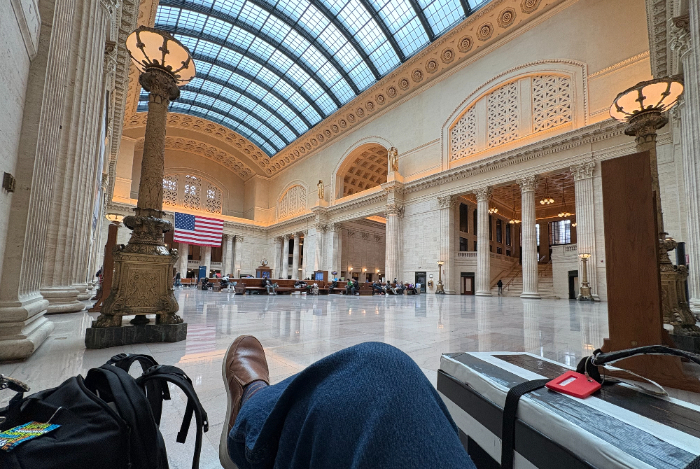
On our final morning, Mary and I go downstairs for coffee. Heading back to our room, I collect my refrozen freezer gel packs at the reception desk. I wash, dry, and cut up enough produce to make two salads. Mary and I retrieve our bags. Her Uber is early, so we say abbreviated goodbyes as she gets in the car. I walk back to Chicago Union Station. I have two and a half hours before my train leaves for Denver. I could sit on the hard wooden benches with everyone else, but I notice a corner of the Great Room that is completely empty. I set up my comfy portable train chair, relax, and watch the flow of train travelers.
The California Zephyr leaves the station on time. I have a seat-mate, and she is going to Reno to see the play The Notebook. Her son is in the cast. She is my age and will be spending two nights sleeping in a coach seat. I ask her “How do you manage to sleep in a coach seat?” She replies “You don’t.” I agree. I tell her “With a little bit of luck, you will be able to use my seat too. I’m heading to the Sightseer car.” It is very full, but I manage to snag a three-seat spot. A young woman sits down in one of ‘my’ three seats. She is going back to Omaha State College, and will be getting off the train at 11PM. That is perfect! My prospects of getting a good night’s sleep are excellent. I go back to my assigned car, go downstairs to the luggage area and retrieve my salad from the cooler and bread flour from the suitcase. Back at my Sightseer suite I have a wonderful salad of tuna fish, Napa cabbage, red peppers, green onions, carrots, cashews, pistachios and a dressing made from restaurant packs of mayonnaise and mustard. Pure Heaven! I’m getting low on bread, so I add water and yeast to my container of flour, sugar and salt. After a vigorous shake, it is bread dough! (It will need to be stirred a couple of times.) I will bake it tomorrow morning when I get to the hostel in Denver.
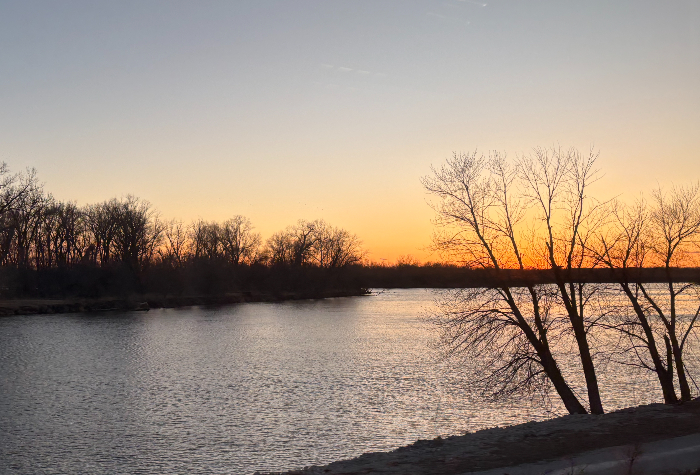
We are in Iowa now. Mary is still in Chicago due to a cascade of flight delays. We pull out of Ottumwa Station just as the sun sets over the Des Moines River.
By 10PM the Sightseer car crowd disperses, and the woman sitting next to me lays down on another three-seater. I get my little nest all set up and am a happy camper. By 2AM, though, I feel like a camper because the heat to the car has been shut off and it is thirty degrees outside. I grab another blanket, mittens, stocking cap and heavy flannel shirt from my luggage that is stored two cars away. This works well enough for me to fall back asleep, but it is not very restful. I have a very long dream that even though I’m not cold, I’m still shaking and don’t know why. I wake up at 5AM still shaking, but at least I understand it now. It’s the movement of the train.
I move to a table and have my breakfast. A mother and father with their two young sons sit at the table across from me. The younger one says to his dad “I’m cold.” I offer him one of my blankets, which starts the conversation flowing. I learn from the mom that they are taking the train from Chicago to Emeryville where they will rent a car and drive to Salinas. They are going to her grandfather’s funeral. He grew up in Salinas and moved to Chicago as an adult, but took the occasional train trip back to his roots. He wanted to do it one more time but wasn’t able to. They are taking this train trip in his memory. I have a very pleasant conversation with the parents while the kids happily eat chuchitos, a small tamal popular in Guatemala and El Salvador. Our conversation is interrupted because the train arrives in Denver very early. I quickly pack up my belongings and head through the station into town.
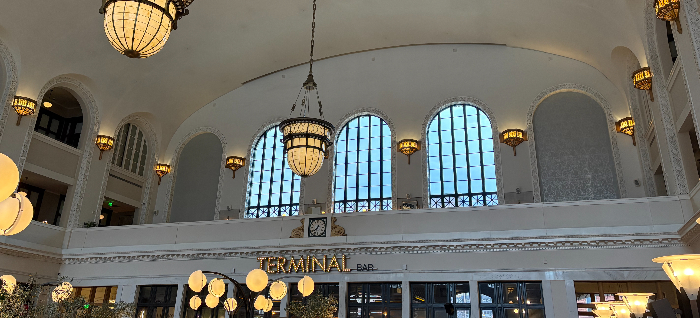
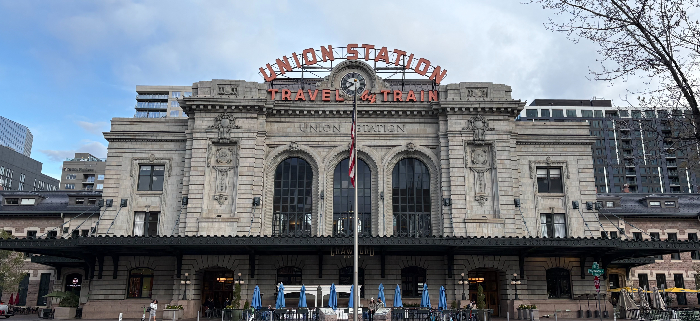
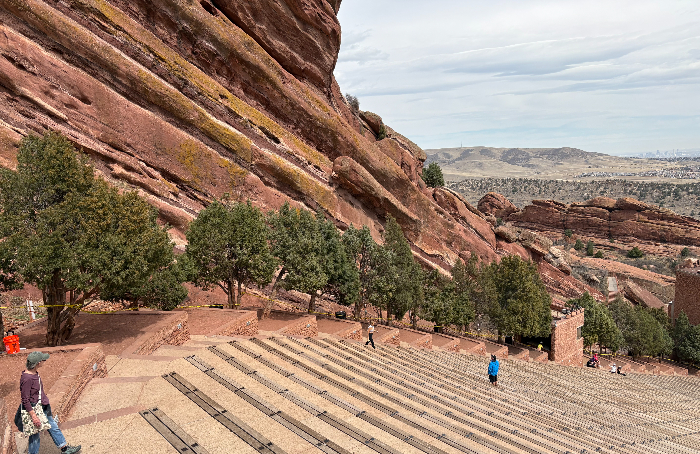
I quickly realize that I left the Windy City and am now in the Winded City. During the one and a half mile walk to the hostel I can really feel the effects of the mile-high atmosphere. Between my rail legs, lack of sleep and limited oxygen, I feel a bit dizzy. I check in to the 11th Ave Hostel and take a long, hot shower. While dressing, I see a text that says “Randy is waiting for you in the lobby”. He is the main reason I came to Denver. We went to the same junior high and high school. Our friendship was more peripheral at the time, but there is a mutual interest in getting to know one another. The first words out of his mouth are “I have about a hundred questions for you. It will only take about two hours.” We start getting caught up on the history of our lives and our circle of friends on the way to Red Rocks Park. The geology of Red Rocks is stunning, with three hundred million year-old sandstone formations situated in a way that suggests a music amphitheater. The suggestion was taken seriously in 1928 when Denver’s manager of Parks, George Cranmer, was visiting a Greek amphitheater in Sicily. Recognizing the similarities, he had an ‘aha moment’ and became determined to create an outdoor venue at Red Rocks. Although the rock formations gave the suggestion of an amphitheater, there was the minor issue of removing over ten thousand cubic yards of earth and boulders to make it a reality. There were no environmental impact statements back then, but there were people who might be upset about the re-engineering of the site. To keep the project on track he instructed his foreman to dynamite all of the boulders at the same time to avoid any possibility of citizens being aware of what was happening and demanding a stop to the demolition. On the day of the explosions, Cranmer stayed away from his office to avoid potential angry crowds. Construction began in 1936, with the first concert being performed in 1941. It has been a very popular performance venue ever since.
We wrap up the day early because I’m beat from my travels, but Randy is waiting for me in the lobby the following morning. We continue our deep-dive conversation about our lives on the way to Central City, an historic mining town. Randy tells me that Central City and neighboring Black Hawk were virtually ghost towns in the 1980s and the one hundred year-old buildings were beginning to deteriorate. The decision was made to allow low-stakes gambling in these towns as a way of generating tax revenue to pay for the restoration. From my snapshot perspective, it seems to have worked. The town feels like a throwback to the 1880s, and the casinos are carefully tucked away so as not not intrude on the town’s character.
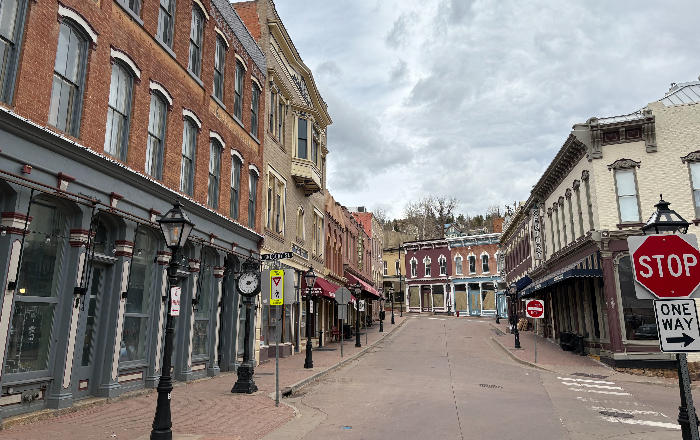
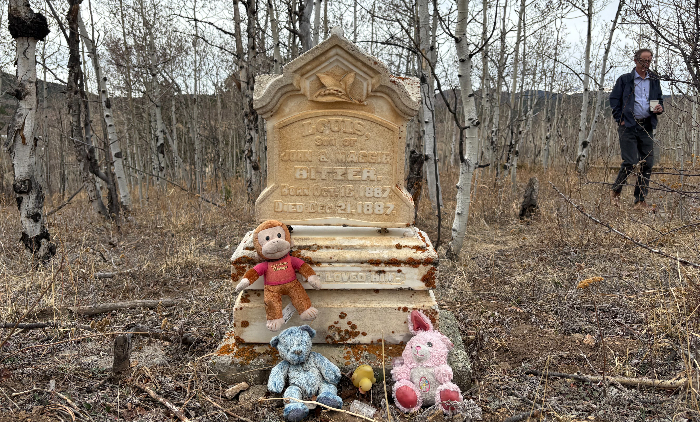
To get the full experience of the town Randy and I go inside one of the casinos, walk past the slot machines, and get burgers at the casino restaurant. They were surprisingly good. We hit the jackpot! Randy says “There’s one more thing here I think you will enjoy seeing.” He drives above the town and parks in front of the local cemetery. We get out of the truck and walk through the meandering paths between the stones. Now this feels like a ghost town! A forest of quaking aspen is doing its best to overtake the graves and I see no effort being made to stop it. I don’t know if it’s budgetary or intentional, but I think it’s the right decision. It is a sobering art piece about the transitory nature of life.
It is late in the afternoon and I have a lot of food prep and packing to do. Randy takes me back to the hostel. I prepare five salad servings in ziplock bags with produce purchased last night. I slice up a loaf of bread that was baked yesterday in the hostel’s toaster oven. At home this loaf would be a failure, but given the lack of rising time due to the frigid Sightseer car and the hostel not having a real oven, I will call it a success. After packing, I head down to the hostel’s lounge to work on the blog. Another couple comes in and we start talking. They are both retired and live in Orange County in California. “We normally go to Hawaii this time of year, but thought we would explore the United States instead.” She says. They are doing it by train, using a combination of Rail Pass coach along with the occasional Roomette. Just for fun, they are ‘roughing it’ here in Denver and will stay at a nice hotel in downtown Chicago. This is right out of Chapter Six in The Art of Frugal Hedonism; Recalibrate Your Senses. Having contrasting experiences makes both of them all the more fun!
I wake at 4:30AM, take a long shower to wake up, and finish my packing. I have way too much stuff! I make a list of the things I never or rarely used. That will help some. I have ideas on how to make my Amtrak Cooler smaller and yet hold more stuff. That will help a lot. I still have over fifty hours of train travel; plenty of time to sketch out some ideas. Randy meets me in the lobby at 7AM and takes me to Union Station. My original expectation for this visit was that Randy and I would only have lunch together once, but he has given me two whole days of his time. I am very grateful and feel like I have a new friend.
Denver to Sacramento via the #5 California Zephyr, 31 hours 29 minutes
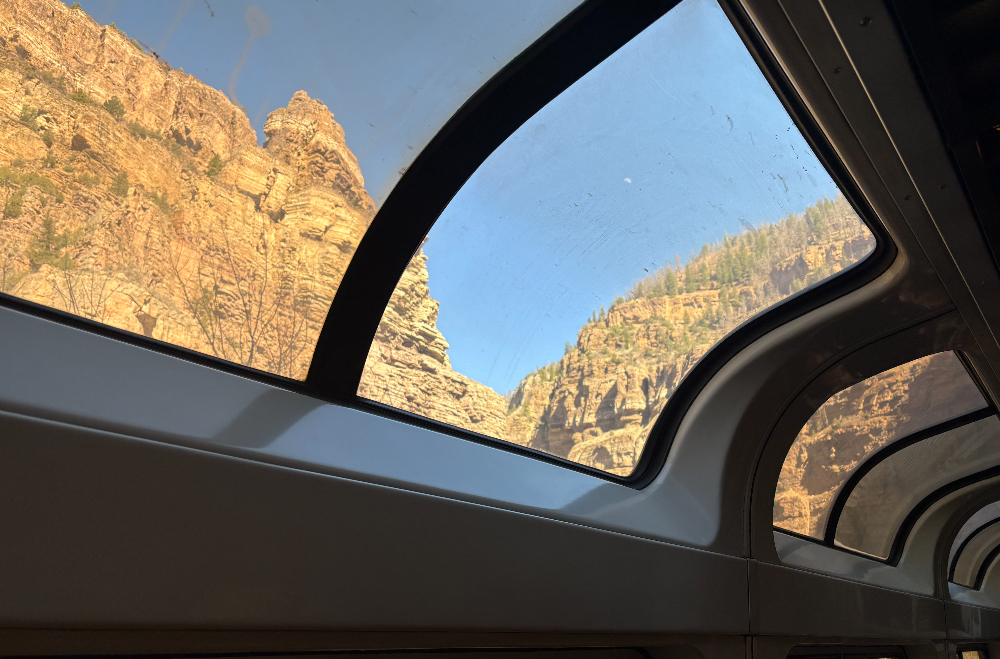
We leave Denver station a half hour late, which is on time in my book. After passing through the town of Golden the train begins its ascent of the Rocky Mountains. At an elevation of 9,200 feet we enter the Moffat Tunnel, which will take us across the Continental Divide. This six-mile long shortcut was completed in 1928 so that trains could avoid the winding, steep and treacherous tracks that traversed Rollins Pass. The tunnel provided a much straighter route, but there was an added bonus of shaving off 2,500 feet of elevation. ‘Hell Hill’, as the pass was affectionately nick-named, became obsolete for train travel but the railroad grades survived, making it ‘Heaven’ for hikers and mountain bikers. Exiting the tunnel, we begin following the route of the Colorado River. Some sections run fast and furious, others are more leisurely. The serene stretches are referred to by some as Moon River. This is because rafters enjoy entertaining Amtrak passengers by bending over while standing on their rafts, and then pulling their pants down. I have been entertained in the past, but there is no show today.
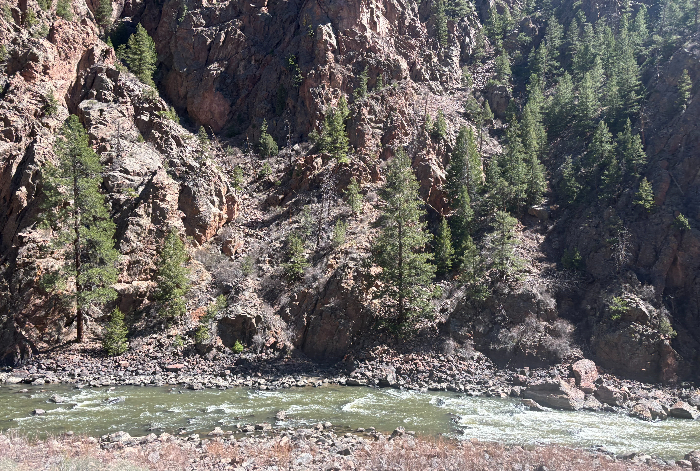
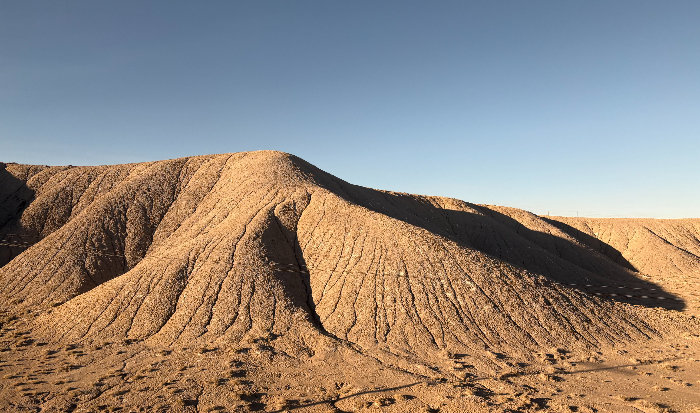
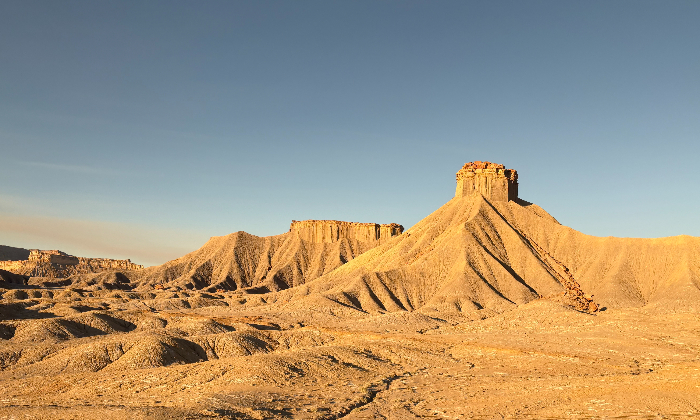
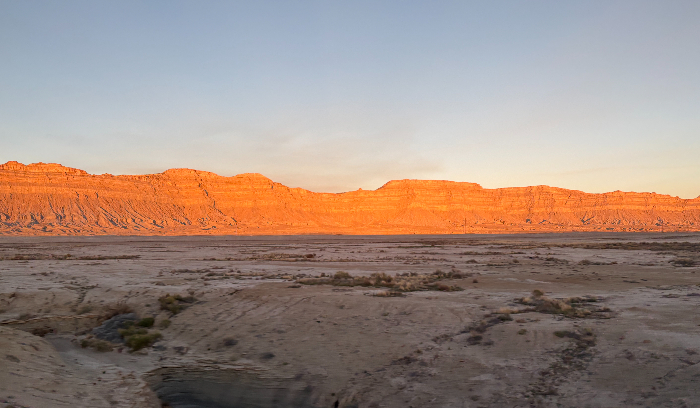
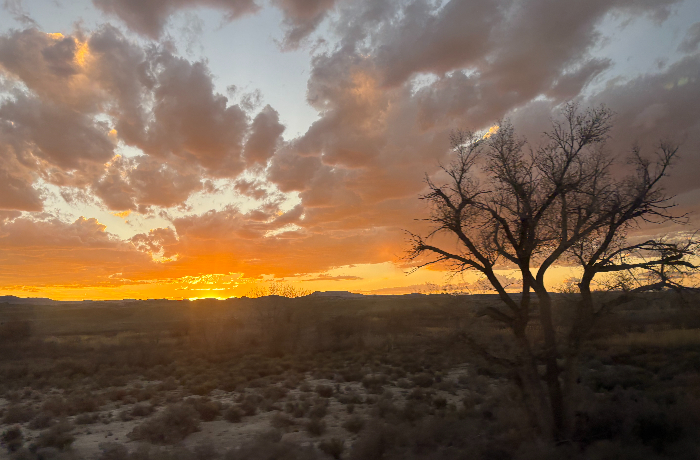
Shortly after leaving the mountains, we enter into a landscape dominated by dramatic Jurassic-era red sandstone formations. In front of these formations are lower gray hills, reminiscent of the Badlands in South Dakota. The gray hills have been carved by water in a way that reminds me of wrinkled elephant skin. This topography continues throughout the Eastern third of Utah, ending as we leave the town of Helper near sunset.
I have a great night’s sleep in the Sightseer car. The heat is on all night and my dreams are peaceful. I clean up my three-seat suite to make room for other passengers, and a man comes over and joins me. He is only five years older than me, but has been riding the rails since 1972, before Amtrak came into existence. He is a fount of knowledge, going into great detail about how dispatchers make use of the two sets of tracks so that freight trains and Amtrak can coexist peacefully. He mentions that when Amtrak is following a slower freight train, some dispatchers will use the occasional second set of tracks, called sidings, as a passing lane, allowing Amtrak to pull ahead and maintain its 79 mph speed. Other dispatchers, however, lack this creativity and will make Amtrak slow down and follow the freight train at its speed, which at times is only 40 mph. Most of Amtrak’s delays are caused by freight trains and are completely out of Amtrak’s control. As if to make a point, our train comes to a complete stop in the Sierra Nevada Mountains and stays there for an hour, due to a faulty freight train engine up ahead that is blocking our path.
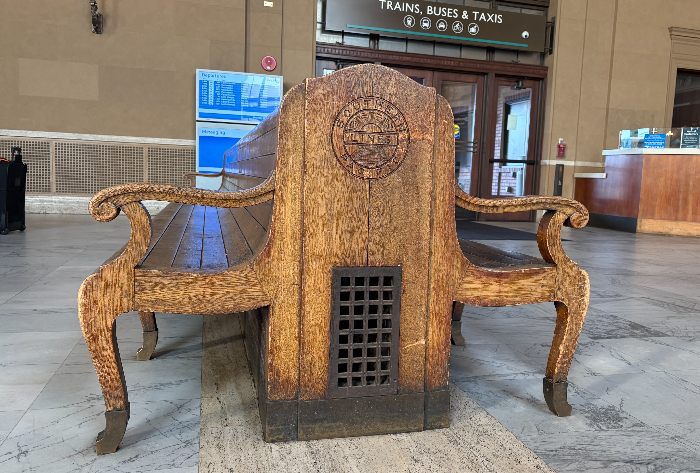
We pull in to Sacramento Valley Station an hour late. It’s not a problem for me, though, because my Coast Starlight train to Seattle doesn’t leave until nearly midnight and it is only 4PM. I could try to find a place to store my bags and go into town, but I’m running out of gas. I’ve been on the road/rails for over twenty days and am happy to content myself with resting in their historic train passenger lobby. Built in 1926, it featured the modern convenience of heated seats! The wooden church pew-style benches had steam running through pipes behind the backrests. The benches are still here, but the heating system is no longer functional.
Sacramento to Seattle, 20 hours 2 minutes via the #14 Coast Starlight
I repack my luggage so that the only thing in my backpack is bedding. Getting on the train at midnight, it’s the only thing that matters. All I need to pack now is my collapsable chair. I take an hour-long nap in it while waiting for the boarding announcement. The train is on time and very full. My seat-mate is going to Seattle too, so sleep will be a challenge. I have lots of memory foam chunks that I strategically place to make upright sleeping comfortable, but it doesn’t work for me. At 1AM I head to the Sightseer car to lay down. Unfortunately, this Sightseer car doesn’t have the three-seat suites. I settle for a two-seat combo and get comfortable enough to have at least a little REM. Two seats in the Sightseer isn’t nearly as good as two seats in Coach. At 4AM my seat-mate enters the Sightseer car and says to me “I’m staying here for the rest of the night. You are welcome to my Coach seat if you want it.” I gladly accept his offer and make full use of both seats, getting three solid hours of sleep.
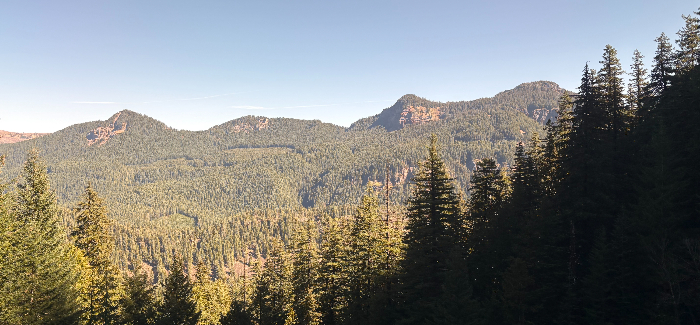
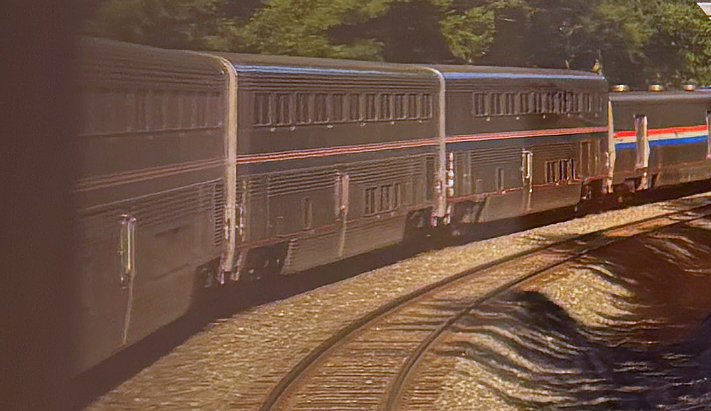
At 7AM we cross the border into Oregon. A half mile outside of Klamath Falls, we come to a standstill to make room for a freight train. Klamath Falls is the first smoke break since Sacramento, and some of the passengers are feeling the nicotine twitch. One of them is caught by an Amtrak employee, opening a window down in the luggage area. He got a couple of puffs in before being sent back upstairs. After a brief stop in Chemult, we begin our ascent of Oregon’s Cascade Mountains. This area is remote, and cell service is a distant memory for well over two hours. With no electronic distraction, I look out the window. The scenery is nice, but it is much more subtle than the ‘Look at me!’ geology of Utah. After crossing the mile-high Cascade Summit we begin a winding descent, traveling through many tunnels and making hairpin (for a train) turns. I can see the front of our train through the window.
I walk to the Sightseer car to soak up some sunlight. The car is very full and I’m surrounded by other people’s conversations. At the table behind me, four young men are talking about Sound Transit’s new light rail line crossing the I-90 floating bridge. They are taking Amtrak from Los Angeles and San Jose for the grand opening of this floating rail line. They mention to me that there are at least ten people on this train just for this event.
King Street Station in Seattle is just an hour away. I have spent twenty-four days away from home including two-hundred hours riding on the train. It was a great trip, but I don’t plan on repeating it any time soon. There were too many nights that I couldn’t get restful sleep. I’m fine if I have a vacant seat next to me, but if I don’t and the Sightseer car doesn’t come through, I’m toast. On this trip, almost all of the trains were booked to capacity. Good for Amtrak! Bad for me. My next plan (Ooh, I said next) is to travel in October when summer is over, school is in session and there are no rail pass sales to boost ridership. I might have better odds of a vacant seat next to me. The big success on this trip, though, is my food. Ditching the frozen chicken and pasta and focusing on salads with canned tuna or shrimp is much easier to manage. I will build Amtrak Cooler 2.1 to take advantage of this approach. It will be smaller, hold more food and still keep things fresh for three days. A project to enjoy while waiting for my next train trip!