Seattle to Portland via the #503 Amtrak Cascades, 3 hours, 25 minutes
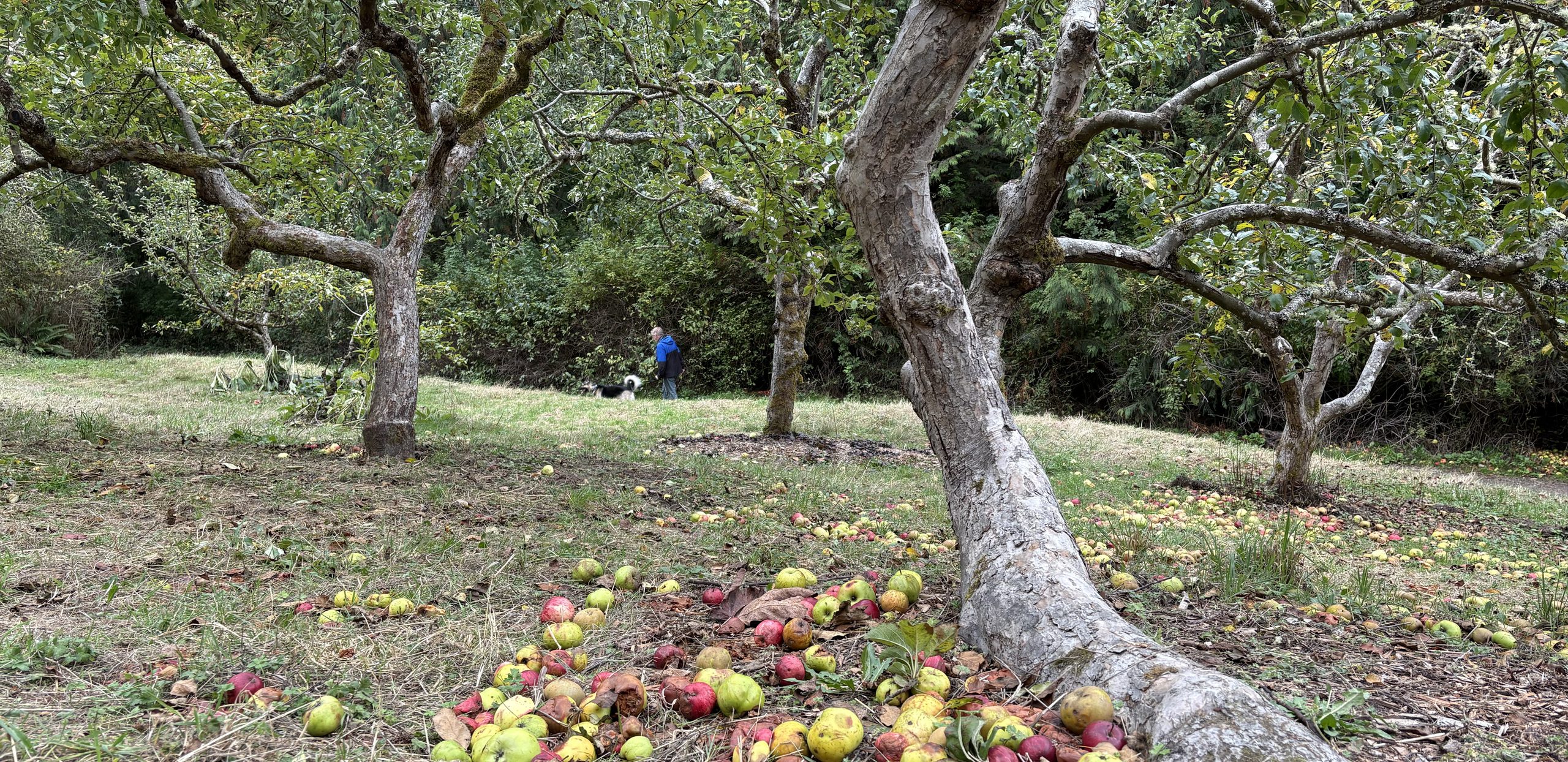
The Amtrak Cooler 2.1 is packed with food and ready for an adventure. My cooler and I will head south to San Diego, with overnight stops in San Luis Obispo and San Clemente. We will then backtrack to Los Angeles and take the Texas Eagle to Chicago, with overnight stops along the way in the Texas towns of Alpine and Austin. From Chicago we head back home on the Empire Builder, with a twenty-four hour stop in Moorhead MN. The cooler is jam-packed with fresh salad fixings, cheese, nuts, canned chicken and tuna. There is also home-baked bread, tangerines and apples. I got the apples for free by taking a short hike to the Piper’s Orchard within the boundaries of Carkeek Park.
Piper’s Orchard dates back to the 1890s. Andrew Piper and his wife, Wilhelmina, moved to Seattle in 1873 and operated a confectionary and bakery until 1889 when the Great Seattle Fire burned it to the ground. Fortunately for the Pipers, the year before the fire they homesteaded an abandoned logging camp north of Ballard and this gave them an opportunity to reinvent themselves. Getting back to their roots (he was a Socialist member of the city council) they created a utopian, back-to-the-earth homestead farm and orchard, transporting their goods to market by horse and wagon. The City of Seattle purchased the land from Andrew and Wilhelmina’s heirs in 1927 to be part of Carkeek Park. With the farm no longer in operation, the orchard quickly became enveloped in vegetation and was lost to memory. In the early 1980s a landscape architect hired by the City was surveying the park to develop a master plan. Traipsing up a steep slope above Piper’s Creek she came across something that seemed out of place. “Oh, that’s an apple tree!” She and a crew of volunteers began clearing away the vegetation and realized that this tree was part of an orchard of apples, pears and nut trees. The orchard has been lovingly maintained ever since then.
Mary drops me off at King Street Station at 6:00am. I will be taking Amtrak’s new Airo train. It is getting its debut on this route but will eventually be used throughout the Northeast Corridor and other state-supported routes like the Amtrak Cascades line. The original plan was to take it to Eugene, but due to track maintenance work everyone will get off in Portland and then transfer to a bus for the final leg of the journey. I board the train and am relieved to see that there is plenty of room for my luggage. The seats are comfy, the windows big and bathrooms commodious. One more plus; the WIFI actually works! The train leaves on time, but stops after only five minutes. Over the PA system I hear “Um, we are having a minor problem with the headlights. Only one of the three are working, and by law, this limits our speed. We are going to back up to a place where we can turn the train around. The headlights at the other end are working fine.” Just like Seattle’s car ferries, the train has two “front ends”. We will use the other end and go “backwards” to Portland. At Tacoma Station a man gets on with his skateboard and sits across from me. He is heading home to Portland and is on this Amtrak line for the same reason I am; to check out this new Airo train.
Portland to Eugene via Amtrak Connecting Bus, 2 hours, 40 minutes
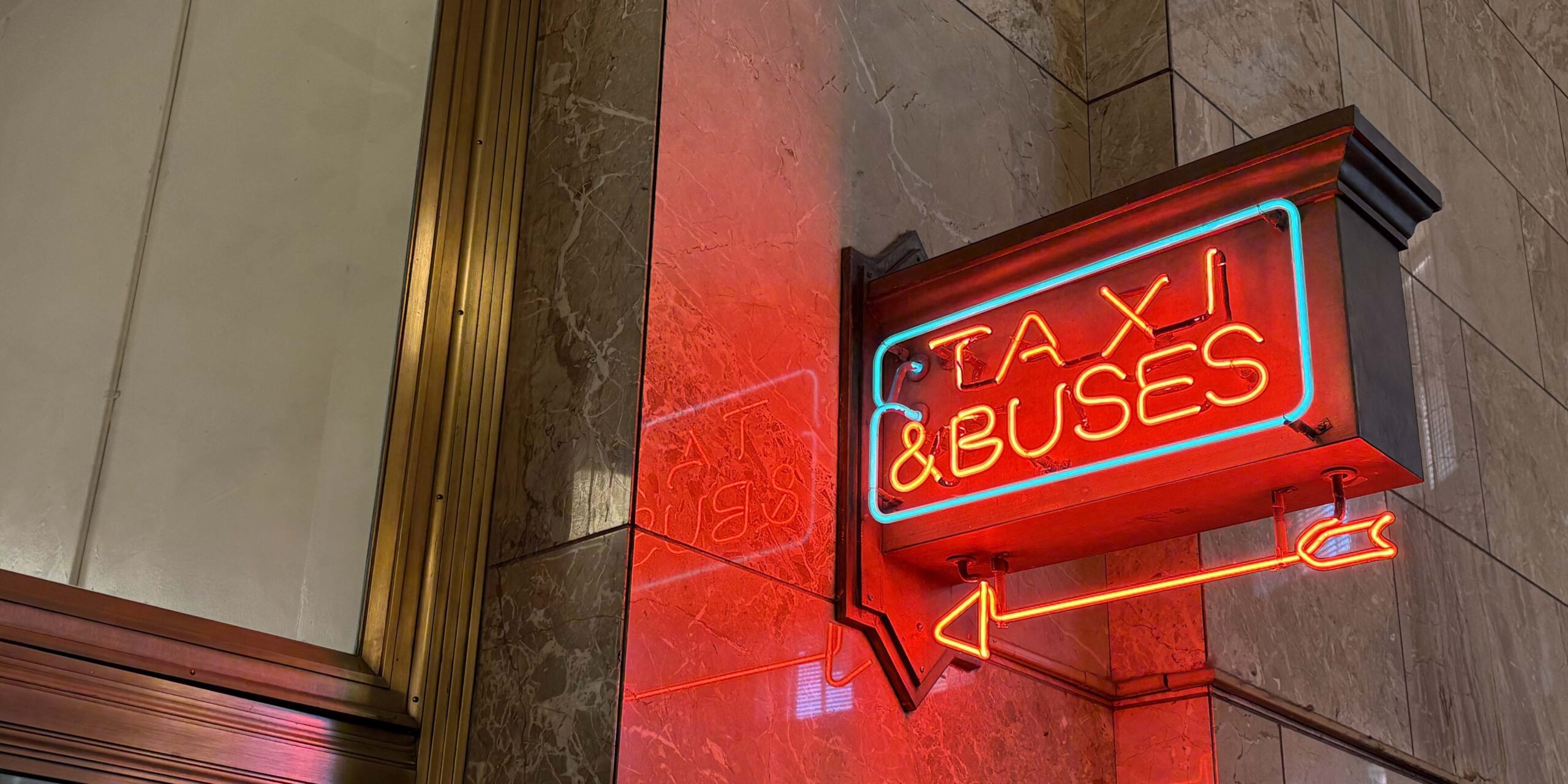
Arriving at Portland’s Union Station, a red neon sign points me in the direction I need to go. The bus is just outside the exit door and is ready for boarding. I’m glad to see that it is a Thruway bus managed by the state of Oregon and not a private bus company. Years ago in the middle of the night, I waited for an Amtrak bus connection in the Pittsburgh Greyhound bus station. I’ve never mingled with such a high concentration of people down on their luck and not happy about it. The Thruway bus leaves on time and is going to Eugene without any stops. It looks like that empty seat next to me will stay that way.
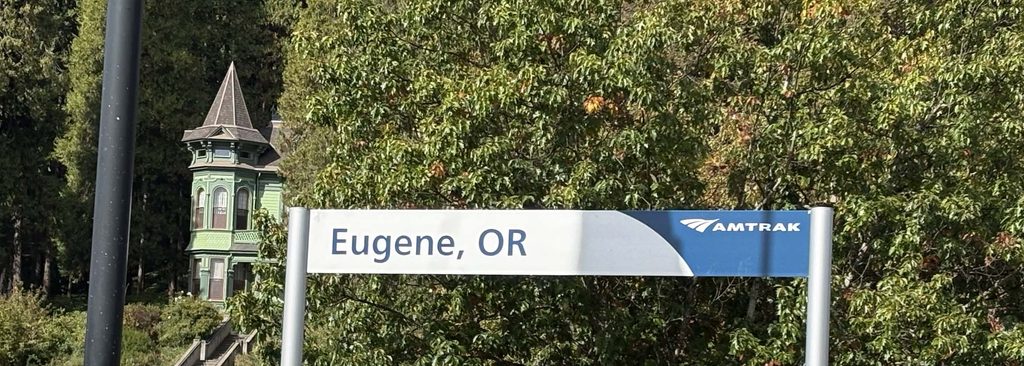
I arrive at the Eugene Amtrak station with two hours to kill. Not enough time to explore, but plenty of time to have a relaxing lunch from the cooler. The station has plenty of room for me on its wooden benches, but the sunshine beckons. I find an out-of-the-way place to set up my collapsible chair and enjoy my peek-a-boo view of Eugene’s most prominent mansion.
Eugene to San Luis Obispo via the #11 Coast Starlight, 22 hours, 9 minutes
The Coast Starlight train is on time, and it looks like I will have an empty seat next to me tonight! In past trips, though, my best nights of sleep have been in the Sightseer lounge car. During a recent forty-six hour trip from Los Angeles to New Orleans I was in my assigned seat for only five minutes, moving into the Sightseer car and only leaving it long enough to get food from my cooler or bedding from my luggage. Some of the Sightseer lounges have wonderful three-seat combos and some of them don’t. I go to the lounge car to check it out and am relieved to see that this one does. I realize I’m blocking the path of an older woman, so I get out of her way and explain why I’m looking at the seats. “They frown on that, you know.” she says. Two young adults with her look at me and raise their hands in a “Whatever” gesture. “I might ask forgiveness instead of permission.” I say. Typically, I am a rule-follower and very uncomfortable veering from the prescribed path. When it comes to getting a decent night of sleep, though, I’m finding that my principles bend a bit. To soften my indiscretions I never lay down until 11pm when the car is virtually empty and am up before 6am when people start returning. I also put out a scrap of paper with the three-letter station code of where I’m departing. I want the conductor to know they don’t have to be concerned about me sleeping through my intended stop. Another thing I do to help relieve my conscience is always leave the bathrooms in better shape than I find them. I have never had a conductor tell me to go back to my seat. If I did, I would.
Since I have the benefit of an empty seat next to my assigned seat, I decide to settle in there for the night. After a couple of hours, though, the siren song of the Sightseer lounge is too enticing. I head in to the almost-empty car and get five hours of sleep. In the morning, people start filtering back in to the car. By lunchtime the car is filled with talk and laughter, as strangers chat with strangers at the shared tables. My table-mate is engrossed in his laptop but I don’t mind. I’m happy to just eavesdrop on other people’s conversations.
The train pulls in to San Luis Obispo at 5pm. Two blocks away is the Hostel Obispo, an old single-family house with very few changes made or needed for its current use. I have a small private room next to the kitchen, where I plan on spending a lot of my time. I mixed up bread dough in Seattle and it has been rising on the trip down. It’s time to bake! I turn on the oven, butter the baking pan, work the dough and place it in the pan for one hour of proofing while the oven gets up to temperature. When the time comes I open the door only to learn that the oven is broken! Okay, plan B. Is there a plan B? There is a tiny toaster oven but the burners will be literally touching the top and bottom of the dough. I preheat it as high as it will go, place the pan inside and slowly reduce the temperature over the next hour to keep the heating elements from being continuously on. The end result is a fairly decent loaf with an ugly black scar on one side. Edible, but not the beautiful loaf I had hoped to give to my friends in San Clemente who have invited me to have dinner with and spend the night. I’ll gift it anyway.
San Luis Obispo to Santa Barbara via the #774 Pacific Surfliner, 2 hours, 35 minutes
My alarm goes off at 5am. I got a good night’s sleep and am grateful for it. Sleeping in coach always takes me down a notch, even with the use of the Sightseer lounge car. I’ve met Amtrak vagabonds older than me who can handle three days in a row traveling coach, but I have to accept the fact that I am not one of them. I load up my cooler from the freezer and fridge and walk to the train station just as boarding begins. I get a little more sleep on the train before arriving in Santa Barbara.
What a cute town! There is a real sense of history here, with its many Spanish Mission style buildings. It’s a relatively new history, though, because in 1925 a 6.8 magnitude earthquake brought Santa Barbara to its knees, destroying most of the town. Much of the credit for the town’s current look goes to civic leader Pearl Chase. She convinced city planners to rebuild Santa Barbara in a Spanish Colonial Revival style inspired by the town’s namesake; Mission Santa Barbara. Construction on this Spanish mission began in 1815. It was completed in the early 1820s, just as Mexico was establishing its independence from Spain and taking control of the area.
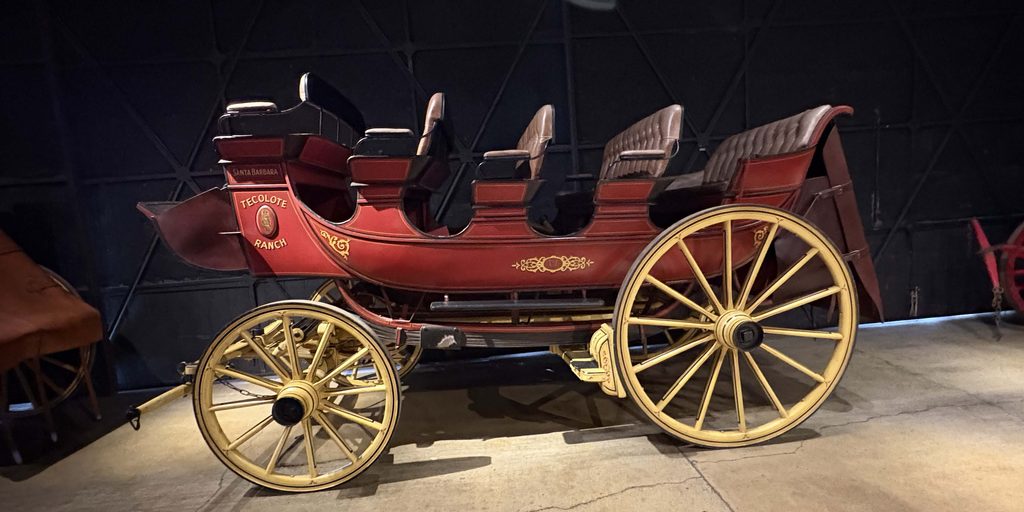
I’m in town only long enough for a late breakfast and short walk, but taking a detour through Pershing Park I pass by a museum tucked away all by itself, next to a baseball diamond. It is the Santa Barbara Carriage and Western Art museum. Inside, it is filled with ornate saddles, chaps, and sombreros, some dating back to the 1870s. Their website says that some of the items were once owned by the likes of Will Rogers and Clark Gable. They also have the saddle and riding outfit of Cisco from the television show The Cisco Kid, which aired from 1949 to 1956. Oh, yes, the museum also has some really cool rides!
Santa Barbara to San Clemente via the #782 Pacific Surfliner, 4 hours, 52 minutes
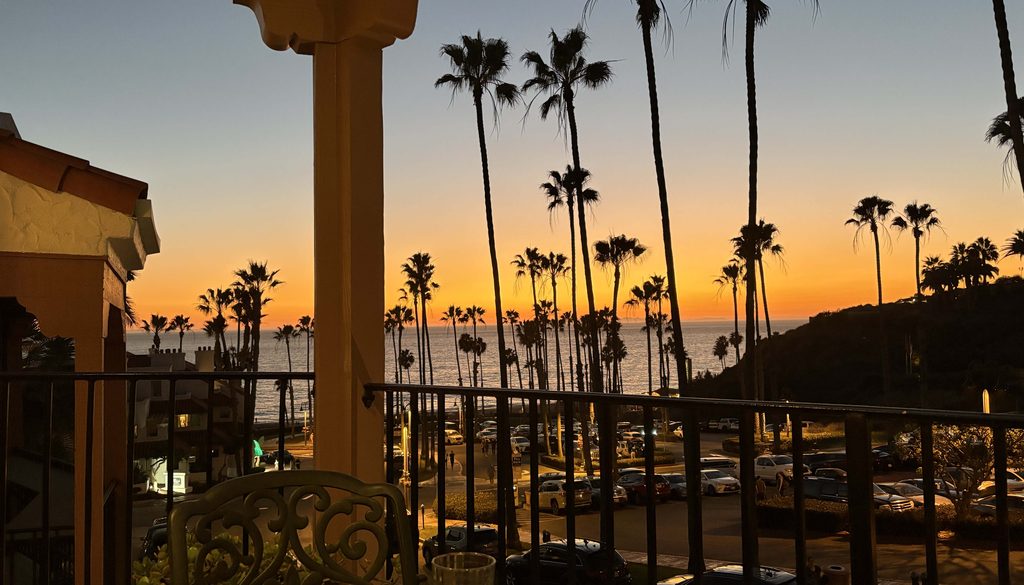
The train hugs the water until the town of Ventura where it veers inland, passing through the heart of the City of Los Angeles. After Irvine, it’s back to the coast. At times, the track is less than twenty feet above the level of the sea. We pull in to San Clemente Pier just as the sun sets and heads west toward Hawaii. It feels like Hawaii here, though; it is hot! My Amtrak cooler feels it too. The internal temperature is approaching fifty degrees, even with the fresh gel packs. I walk up the hill a couple of blocks to the condo where I will be staying. One of my Friday coffee guys and his wife have invited me to have dinner with them and spend the night. We have a great evening of conversation on their patio before enjoying tacos at a Mexican restaurant in the village.
The only thing that would have made the night more enjoyable was if I hadn’t lost my phone. Thanks to the Find My app and Mary’s help back in Seattle, I knew it was near the restaurant so we headed back. Searching in and outside the restaurant, the next door neighbor sees us and says “Hey, I think I know what you are looking for.” He then goes into his house, returning with my iPhone. That was too close!
Tom and Barbara’s condo was built in 1982 and originally had all the charm you would expect from that era; none. Undeterred, they had an architect draw up a plan to give it a Spanish Colonial Revival feel, which they then improved upon. The result is perfection. It is warm and inviting and feels very authentic. It’s as if it has always been there. Ole Hanson would be proud. Ole Hanson was mayor of Seattle in 1918-1919 but his main claim to fame is the town of San Clemente. There was no town until he built it. In 1925 he purchased two thousand acres of undeveloped land and then built a number of public structures adhering to the Spanish Colonial Revival ethos. He also took the unprecedented move of adding deed restrictions to the vacant lots he sold, requiring all building plans to be submitted for architectural review to make sure they would blend in. The story didn’t end well for Ole, though. He was over-leveraged when the Great Depression hit, and he lost everything including his magnificent mansion on the bluff overlooking the ocean. The deed restrictions took a hit too, with lax enforcement allowing many of the original structures to be demolished. There are still enough of them, though, and community pride and preservation are back in vogue.
The next morning, Tom and I continue our conversation at a coffee shop in the village. He takes me to the train station and we say our good-byes.